Mapping the Insight Horizon: The Master Cartographer's Guide to *A World Appears*
Key Takeaways from the Terrain
- The Sentience Spectrum: Pollan argues that consciousness isn't a human monopoly; it’s a topographical feature across the tree of life, from neurons to root tips.
- The "Hard Problem" of Cartography: Why does subjective experience exist at all? Pollan navigates the friction between physical brain structures and the "feeling" of being alive.
- Plant Neurobiology: The chameleon vine and electrical signaling systems prove that plants possess a complex, responsive agency once thought unique to animals.
- Psychedelics as Surveying Tools: Altered states act as "cleansers" for the doors of perception, allowing us to see the landscape without the filter of the ego.
- The Useful Hallucination: The sense of "self" is a navigational construct—a map that the brain constantly redraws to help us move through the world.
Mapping the Unmapped Continent
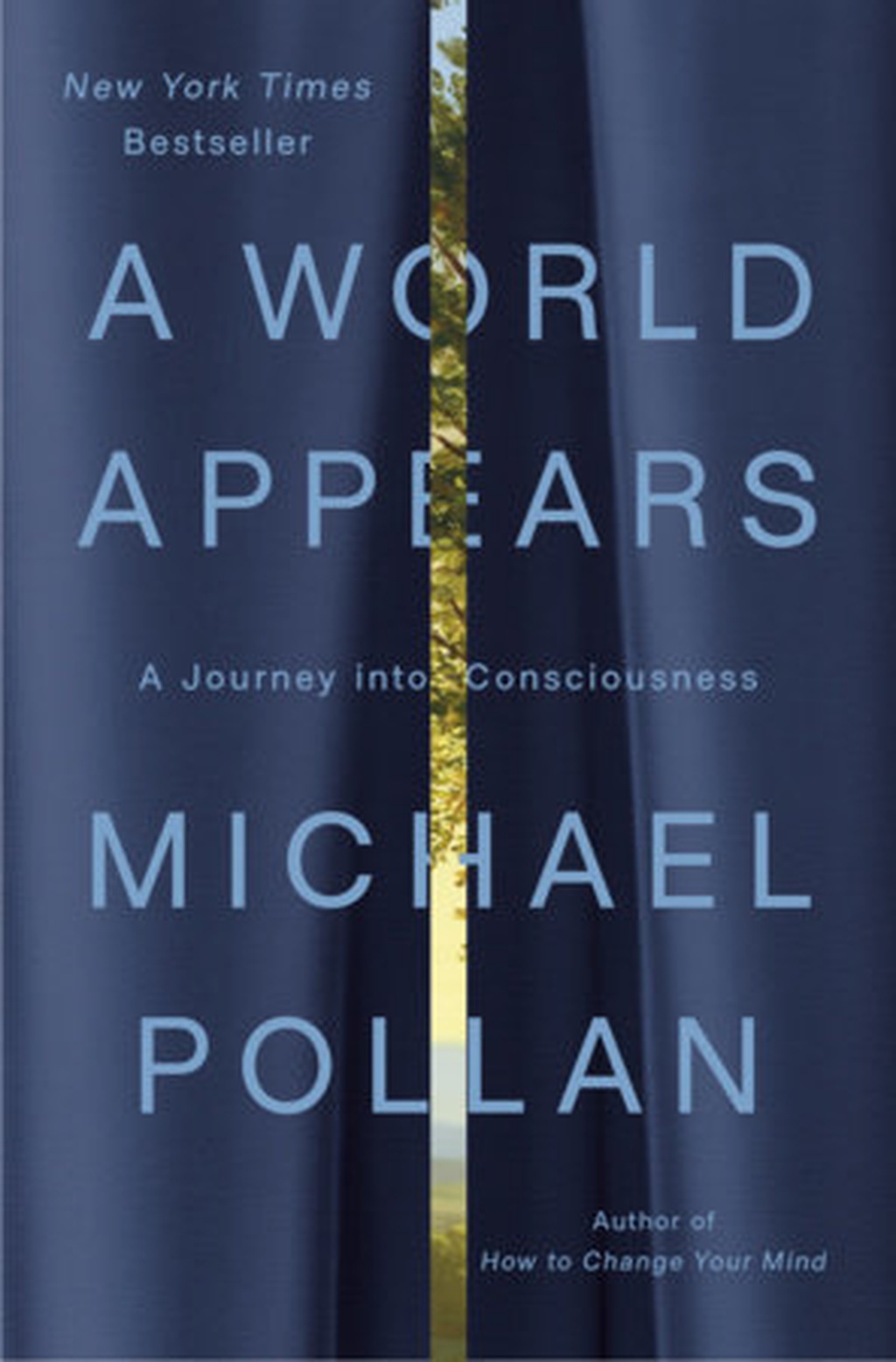
In the grand atlas of human understanding, few territories remain as shrouded in fog as the continent of consciousness. We have charted the ocean floors and mapped the distant stars, yet the very ground we stand on—the subjective "I"—remains a terra incognita. In his 2026 masterpiece, A World Appears: A Journey into Consciousness, Michael Pollan picks up the transit and the theodolite to survey this elusive landscape.
Pollan, the veteran explorer of the edible and the psychedelic, shifts his focus from the substances themselves to the theater in which they perform. He invites us to view consciousness not as a magical byproduct of biology, but as a primary topographical feature of the universe. According to recent Pew Research Center data from October 2025, while 75% of U.S. adults continue to engage with books, the way we consume information is shifting toward immersive, multi-sensory experiences. Pollan’s work reflects this shift, blending rigorous science with the vivid, "felt" reality of the explorer.
The Hard Problem and the Cartography of Mind
Every mapmaker faces the "Hard Problem"—a term coined by philosopher David Chalmers. It is the question of why physical processes in the brain (the hardware) result in the rich, internal tapestry of experience (the software). Why does the wavelength of light produce the *feeling* of red? Why does a chemical reaction in the gut feel like the mood of an autumn day?
Pollan navigates the tension between the Global Workspace Theory (GWT) and Integrated Information Theory (IIT). GWT suggests the brain is like a theater where the most urgent information rises to a central "global workspace" for all modules to see. IIT, proposed by Christof Koch and Giulio Tononi, argues that consciousness is a measure of integrated information—a mathematical blueprint of how interconnected a system is. As noted in Psychology Today (2025), the "adversarial collaborations" between these two camps have become the frontline of modern cognitive cartography, yet the definitive map remains elusive.
Beyond the Human Ego: Sentience in the Green Kingdom
Perhaps the most radical section of Pollan's survey is his descent into the "Green Kingdom." He introduces us to plant neurobiologists who argue that the nervous system is just one way to build a mind. Plants, he suggests, are not passive scenery; they are active cartographers of their own environments.
Consider the Boquila trifoliata, or chameleon vine. This remarkable plant mimics the leaf shape of whatever it climbs—even when that host is made of plastic. This implies a form of vision or sensing that does not rely on eyes or a central brain. Furthermore, research published in Trends in Plant Science (2023) and echoed in recent agricultural breakthroughs (2025) shows that plants communicate stress, thirst, and danger via electrical and chemical signals. In one study, tomato plants were found to "click" ultrasonically up to 35 times per hour when stressed—a language we are only just beginning to decode with AI algorithms.
Pollan draws a clear distinction: Sentience is the ability to register sensation and respond; Consciousness is the self-reflective awareness of doing so. While not all sentient beings are conscious, the "Master Cartographer" argues that the roots of awareness run much deeper than the human neocortex.
The Architecture of Self: The Useful Hallucination
What is the "self"? Pollan, influenced by neuroscientist Anil Seth, suggests the self is a "controlled hallucination." It is a predictive model the brain builds to make sense of the incoming data. Just as a map simplifies the terrain to make navigation possible, the "I" simplifies the chaos of neural firing into a stable identity.
This self is not static. It is a constantly updated blueprint. As Michael Levin points out, the self is memory reworking itself as circumstances demand. When we read, we aren't just absorbing facts; we are integrating them into this internal atlas. A study from Yale University suggests that book readers live 23 months longer on average, perhaps because the mental exercise of mapping complex narratives strengthens the very structures that hold the self together.
Psychedelics: Cleansing the Doors of Perception
Pollan returns to his roots, exploring how psychedelics like psilocybin and LSD act as tools for the mental surveyor. By dampening the "Default Mode Network"—the brain's command center for the ego—these substances allow the "doors of perception" to swing wide. For a few hours, the map is discarded, and the explorer experiences the terrain directly.
This "ego dissolution" isn't just a recreational trick. It provides a vantage point from which to study consciousness itself. As Aldous Huxley famously noted, the brain acts as a "reducing valve," filtering out the vast majority of reality so we can focus on survival. Psychedelics loosen this valve, revealing a world that is "deeper and stranger than our everyday reality."
The Future Map: AI and the Engineering of Feeling
Finally, Pollan looks toward the silicon horizon. Can we engineer consciousness? If consciousness is a matter of integrated information, can a sufficiently complex AI develop a "felt" experience? While we have broken the Turing test benchmark (2025), the gap between *processing* information and *feeling* it remains the ultimate frontier.
Pollan remains skeptical but open. He suggests that we may soon need a new set of ethical maps to navigate a world where our tools—whether they are plants, animals, or algorithms—possess a flicker of the same light that illuminates our own minds.
Conclusion: Navigating Your Own Atlas
A World Appears is more than a book; it is a call to pay attention to the act of paying attention. In a world where 40% of Americans read zero books a year (Pew Research, 2025), the ability to focus, to map, and to reflect is becoming a rare and vital skill. Whether you are walking through a garden or staring at a screen, remember that the world is only half of the equation. The other half is the consciousness that makes it appear.
Want to go deeper?
Turn this book into an interactive visual mind map on Summary Maps. Explore every chapter, key idea, and connection — all in one view.
Try Summary Maps Free →